
GAMSAT Preparation
The GAMSAT Exam
The GAMSAT, a standardised test administered by the Australian Council for Educational Research (ACER), serves to evaluate an individual’s readiness for pursuing advanced studies in medical and health-related professional programs. This assessment is a crucial requirement for admission to various medical schools in countries like Ireland and the United Kingdom, that offer graduate-entry programs. The Royal College of Surgeons in Ireland (RCSI), University College Dublin (UCD), University College Cork (UCC), and the University of Limerick are the institutions in Ireland where this examination is mandatory. It implies a significant step for individuals with a prior university degree who aspire to enter the medical field. Notably, holding a bachelor’s degree in medicine is not a compulsory prerequisite for individuals looking to transition into graduate medicine; candidates from diverse academic backgrounds can undertake the GAMSAT test to embark on a new career path in medicine.

How is the test conducted?
The GAMSAT Exam consists of three sections, each designed to evaluate distinct skills essential for proficiency in related disciplines.
- The first section emphasises Humanities and Social Sciences reasoning, necessitating candidates to interpret and analyse intricate written and graphical content spanning diverse fields.
- Following this, the second section evaluates candidates’ aptitude in written communication through essay writing based on provided prompts.
- Lastly, the third section gauges candidates’ proficiency in biological and physical sciences reasoning through a series of multiple-choice questions.
The examination spans a duration of 6 hours and encompasses three distinct sections.
- The first section entails 100 minutes for 62 questions.
- Followed by a second section lasting 65 minutes dedicated to two 30-minute writing tasks, including 5 minutes of preparation.
- The third section extends over 150 minutes and includes 75 questions.
The Written Communication component is conducted remotely, while the Reasoning in Humanities and Social Sciences and Reasoning in Biological and Physical Sciences sections are administered at physical centres, occurring two weeks subsequent to the remote section.
Score
To obtain the GAMSAT score each part is scored independently, and an overall score is then defined using the following calculation:
Overall Score = (1 x Section I + 1 x Section II + 2 x Section III) / 4
Typically, scores falling below 50 are perceived as less competitive. The GAMSAT evaluation spans a range of 0 to 100 in each of its three segments, with an average score typically falling between 50 and 60.
Contact us to learn more about Dublin's GAMSAT exam preparation
Our one-to-one tuition method is 100% designed to enable our students to gain a maximum points possible.
Contact us by clicking below !
The different sections in detail :
First section : Reasoning in Humanities and Social Sciences
The first section of the GAMSAT Exam concentrates on the interpretation and evaluation of social and cultural concepts portrayed in a variety of textual formats, such as narratives, creative works, expository texts, and essays. This section evaluates skills in verbal reasoning, conceptual comprehension, logical reasoning, and a combination of objective and subjective analyses. It comprises multiple-choice questions offering four alternatives and aims to assess the ability to extract crucial information, draw inferences, and apply reasoning skills crucial for medical practitioners. Although not explicitly assessing verbal communication, proficiency in comprehension indicates an aptitude for deciphering intricate narratives and diverse viewpoints, foundational for effective healthcare communication. Succeeding in this segment necessitates maintaining composure, applying logical reasoning, and showcasing refined skills within a constrained timeframe.
Second section : Written Communication
The Written Communication section comprises four statements unified by a shared theme. While one task delves into socio-cultural issues, another delves into personal and social matters. The selection of themes aims to maintain equality for individuals whose first language is not English.
The assessment primarily centres on two key elements: the depth of ideas presented and the effectiveness of their articulation through language. An essential criterion involves the coherent structuring of thoughts, with language proficiency critiqued based on its influence on the clarity and persuasiveness of the response. The accuracy of ideas is not a determining factor, but relevance to the topic is pivotal for achieving high scores.
Third section : Reasoning in Biological and Physical Sciences
Section 3 of the GAMSAT Exam assesses candidates’ comprehension of Chemistry (40%), Biology (40%), and Physics (20%) through a series of multiple-choice questions. These questions encompass a variety of stimuli, including textual passages, mathematical expressions, graphs, tables, and diagrams, aiming to evaluate scientific reasoning, problem-solving abilities, and grasp of fundamental principles. The assessment places a strong emphasis on the application of knowledge in novel contexts and the interpretation of data, rather than rote memorisation. Particularly in Biology, questions are intricately crafted to test candidates’ comprehension, prompting them to focus on understanding question structures rather than merely covering broad content. This section is tailored to mirror the critical thinking and analytical skills essential in medical practice, reflecting the need for healthcare professionals to make informed decisions promptly based on their scientific acumen.
GAMSAT Elite preparation courses
Our GAMSAT preparation courses offer personalised one-to-one sessions with experienced instructors from Dublin, delivering tailored guidance to cater to the specific needs of each student, focusing on the content and structure of the exam. These courses incorporate specialised test-taking strategies rooted in our comprehensive understanding of the examination.
A key emphasis in our methodology is tackling reasoning challenges. We prioritise thoughtful analysis over mere repetition, stressing the significance of regular review of exercises.
At the core of our approach is the individualised support aimed at addressing the unique weaknesses of every student. Acknowledging the diversity in strengths and weaknesses, we leverage students’ proficiencies while offering targeted methods and assistance to enhance their areas of development.

Requirements
Students need to apply via the Central Applications Office (CAO) for Graduate Entry Medicine program. Also every student needs the Garda Vetting.
University of Limerick (UL) :
Minimum Entry Requirements : Applicants must have a first or second class Level 8 honours degree to meet the requirement.
Only for : Speech and Language Therapy (Professional Qualification) MSc. And, Occupational Therapy (Professional Qualification) MSc.
University College Dublin (UCD) :
Minimum Entry Requirements : Applicants must have a minimum of a 2.1 (second class honours, grade one) in their first honours bachelor degree (NFQ Level 8). The degree can be in any discipline.
Royal College of surgeons in Ireland (RCSI) :
Minimum Entry Requirements : Applicants who wish to enter Graduate Entry Medicine, must hold a minimum of a 2.1 (second class honours, grade one) result in their first honours bachelor degree (NFQ Level 8). The degree can be in any discipline.
University College Cork (UCC) :
Minimum Entry Requirements : Applicants must have a minimum of a 2.1 (second class honours, grade one) in their first honours bachelor degree (NFQ Level 8). The degree can be in any discipline.
GAMSAT Timeline
| March 2024 | September 2024 | |
| Registrations open | November 2023 | May 2024 |
| Standard registrations close | Monday, 22 January 2024 (9pm AEDT, 10am GMT) | Thursday, 4 July 2024 (10pm AEST, 1pm BST) |
| Late registrations close | Thursday, 1 February 2024 (9pm AEDT, 10am GMT) | Thursday, 11 July 2024 (10pm AEST, 1pm BST) |
| Reasonable adjustments close | Monday, 22 January 2024 (9pm AEDT, 10am GMT) | Thursday, 4 July 2024 (10pm AEST, 1pm BST) |
| Refund requests close | Thursday, 1 February 2024 (9pm AEDT, 10am GMT) | Thursday, 11 July 2024 (10pm AEST, 1pm BST) |
| Deferral requests close | Thursday, 1 February 2024 (9pm AEDT, 10am GMT) | Thursday, 11 July 2024 (10pm AEST, 1pm BST) |
| Test windows | Written Communication: 9-10 March 2024 | Written Communication: 24-25 August 2024 |
| Humanities and Biological Sciences: 22-24 March 2024 | Humanities and Biological Sciences: 13-15 September 2024 | |
| Results available | Late May 2024 | Mid November 2024 |
About us…
With over 30 years of experience in education, we provide tailor made mentorship and one-to-one tutoring.
Our committed team from Dublin, is devoted to enhancing your success prospects by meticulously organising your entire admissions portfolio to ensure thorough exam preparation.
Recognising the significant challenges posed by these exams, our team conducts comprehensive analyses across all subject areas, identifying strengths and weaknesses to provide tailored guidance aimed at helping you achieve the highest possible score.
GAMSAT Elite is dedicated exclusively to delivering a top-tier preparation program designed to assist students aspiring to pursue a career in medicine.

Request our brochure
Which universities require the GAMSAT exam ?
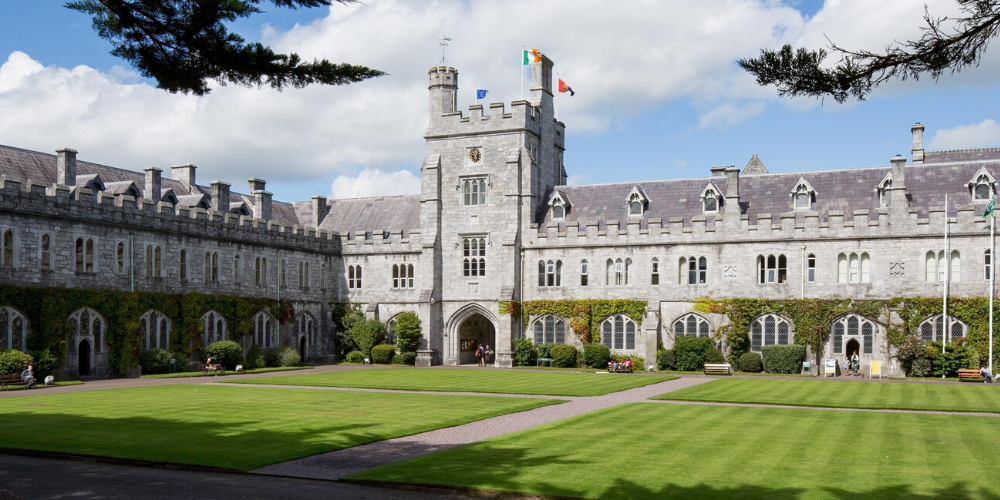
University College Cork (UCC) was established as one of the three Queen’s Colleges formed under the Irish Universities Act. Over time, UCC has evolved into a distinguished research institution in Ireland, celebrated for its unwavering dedication to academic excellence, pioneering spirit, and active community involvement.
The university has been instrumental in shaping the intellectual, cultural, and societal fabric of Cork and the wider Irish community. With a dynamic campus, esteemed faculty, and a diverse array of undergraduate and postgraduate programs spanning various fields like arts, sciences, medicine, engineering, and business, UCC continues to draw bright minds and scholars from across the globe.
Its success not only manifests in academic accomplishments but also in its significant contributions to society through impactful research, innovation, and community service.

The University of Limerick (UL) has solidified its standing as a prominent institution of higher education in Ireland, characterised by a legacy of innovation, academic excellence, and significant contributions to both academia and society. Initially established in 1972 as the National Institute for Higher Education, Limerick, it attained university status in 1989. Since this transformation, UL has undergone notable expansion, enhancing its academic programs, research capabilities, and campus infrastructure.
Recognised for prioritising student-focused education, interdisciplinary research, and community involvement, UL consistently ranks among the premier universities in Ireland and worldwide. Its achievements are evident through a vibrant campus environment, a diverse and skilled faculty, and a strong emphasis on fostering innovation and entrepreneurship. By upholding standards of excellence in teaching, research, and community service, the University of Limerick continues to shape the future of education while leaving a positive imprint on society.

The Royal College of Surgeons in Ireland (RCSI) boasts a rich legacy spanning more than 230 years. It is the premier institution of its kind in Ireland to achieve such royal recognition. Initially established to deliver education and training for surgeons, RCSI has since transformed into a comprehensive health sciences institution, offering a spectrum of undergraduate and postgraduate programs in medicine, pharmacy, physiotherapy, nursing, and various allied health disciplines. Over the course of its existence,
RCSI has remained at the vanguard of medical education and research, cultivating generations of adept healthcare professionals who have left indelible marks on the medical landscape both nationally and globally. Upholding a steadfast commitment to excellence in education, research, and clinical practice, RCSI stands as a beacon of distinction in healthcare education and pioneering advancements.
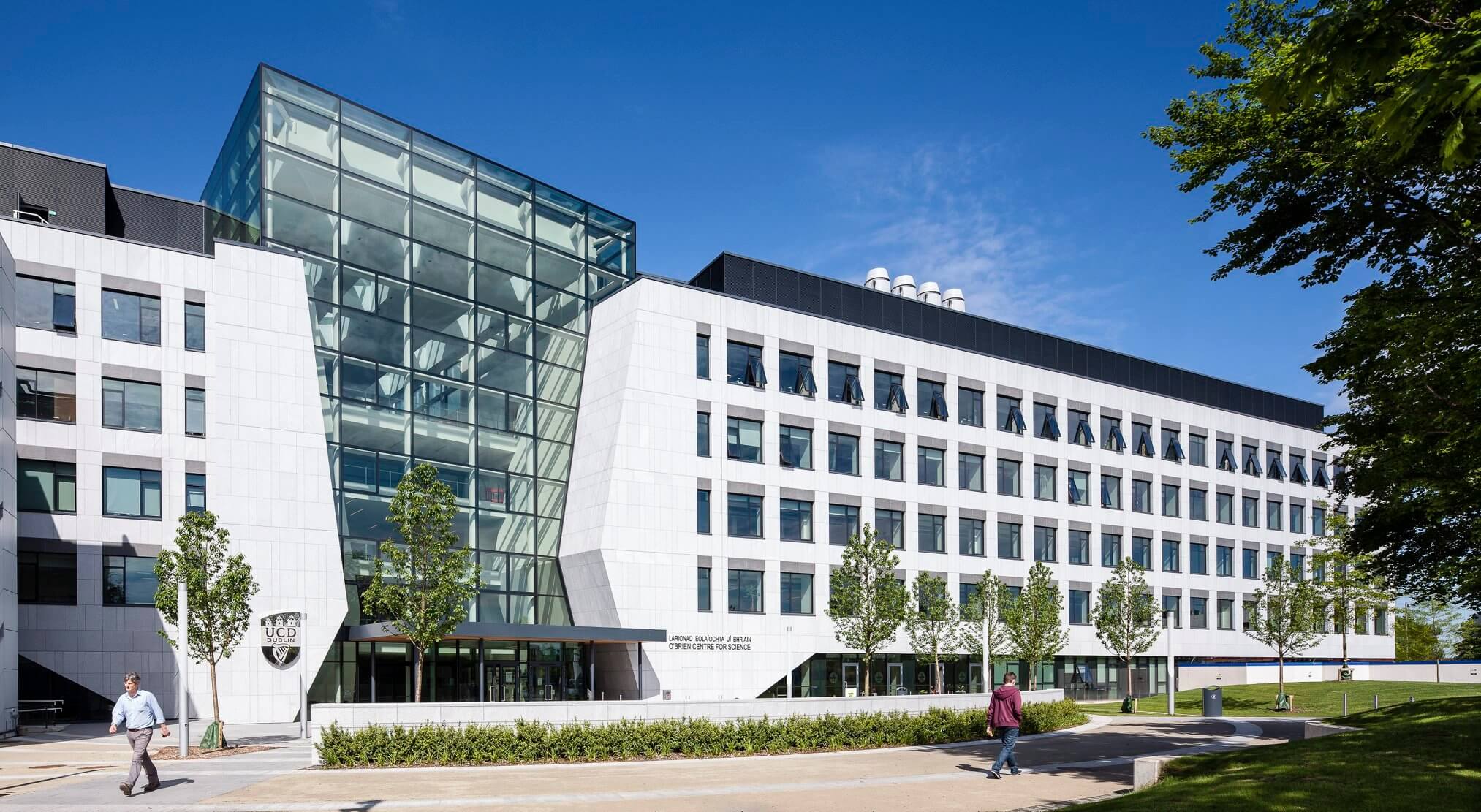
University College Dublin (UCD) is home to a prestigious medical school with a long-standing reputation for excellence in education, research, and clinical practice. UCD has remained steadfast in delivering a superior educational experience and nurturing academic distinction across diverse fields of study. The university has experienced substantial growth over time, expanding its physical campus and introducing new academic programs to address the evolving societal demands.
UCD has garnered acclaim for its pioneering research initiatives and culture of innovation. The faculty comprises esteemed scholars and researchers renowned for their leadership in their respective domains, contributing to groundbreaking discoveries that drive societal progress.
Presently, UCD stands as a premier educational institution in Ireland, consistently recognised among the nation’s top-ranking universities and on the global stage. Its achievements underscore a steadfast commitment to excellence in education, research, and innovation, coupled with a mission to generate positive societal impact through the dissemination and creation of knowledge.
Contact us